Showing posts with label unschooling. Show all posts

Tuesday, October 16, 2018

Native Plants Class


One of the best things to happen since we moved here,
is the abundance of opportunities for gardeners to prolong their education.
I graduated from the Master Gardener's program in April,
but continue to take classes offered by the Extension Office.
We are fortunate to live close to two different Extension Services,
so there is always something on the schedule to learn about.
Most courses or workshops are held at local libraries,
which couldn't be more convenient.
Last weekend, I had the chance to take a class on one of my favorite subjects,
native plants.
When I lived in Florida,
I gravitated toward this type of gardening,
so this class was a fantastic juncture to put my prior knowledge to use.

gaillardia

Even though we are several zones apart,
it was wonderful to learn that many of the plants I grew in Florida,
are also native here in North Carolina.
The many benefits of gardening with natives include:
1. easily adaptive to temperature changes,
2.  need less water or are drought tolerant,
3.  attract beneficial insects and pollinators,
4.  create food/shelter for wildlife,
5.  prevent invasive plants from overtaking an area because natives are better adapted.


beautyberry

One of the most important aspects of gardening to me
is to provide food, shelter and nesting areas for wildlife.
Many flowers, bushes and trees do just that.
Hummingbirds and butterflies often enjoy nectar from blossoms
on buckeye trees, swamp hibiscus and coral honeysuckle.
This beautyberry is an example of a bush that feeds birds
during the colder part of the year.


Joe Pye weed
Nurturing pollinators ensures that our crops continue to produce.
Butterflies, bees, wasps and birds all aid our food system
by being part of the pollination cycle.
Without these critters, we would be in dire straits.
It just makes sense to support their population.
Joe Pye weed is one of the most visited plants
in the butterfly bed.


milkweed
Some insects are dependent on particular plants,
such as the monarch butterfly.
The native milkweed is the only plant
on which they will deposit their eggs.
The eggs hatch, the caterpillar eats the egg and then begins eating the plant.
In a couple of weeks, it finds a safe spot to form a chrysalis,
where it remains for about 2 weeks,
until the transformation is complete.
What an amazing metamorphosis to witness.


Our class took place at the Maiden library,
where the Advanced Gardener Series also takes place.
This sweet demonstration garden is maintained
by volunteers.


One of the volunteers was in our class,
and explained that she had cut back this gorgeous hydrangea in the spring.
As you can see, it is nearing the top of the window.


You almost can't count the number of blooms!
No doubt, earlier in the year, it must have been a riot of color!
Even though it's no longer a showstopper,
it is still fostering wildlife.

gardenia


I'm not sure what this beauty is,
but it would fit right into my blue garden!
Being able to extend my knowledge about gardening
is such a blessing.
The best part is sharing that experience with others
who are just as passionate about it as you are.

In the spring, I will be looking for more natives to add to the garden.
Thoughts have even crossed my mind
about starting a native nursery,
to aid those who are also interested in encouraging indigenous species.
Who knows?
Anything is possible...



Here's a great resource 
for Native Plants in North Carolina.


Thursday, January 11, 2018

Ice Luminaries


I don't know about you,
but we had some frigid temperatures last week.
In fact, it didn't get up past freezing for over a week.
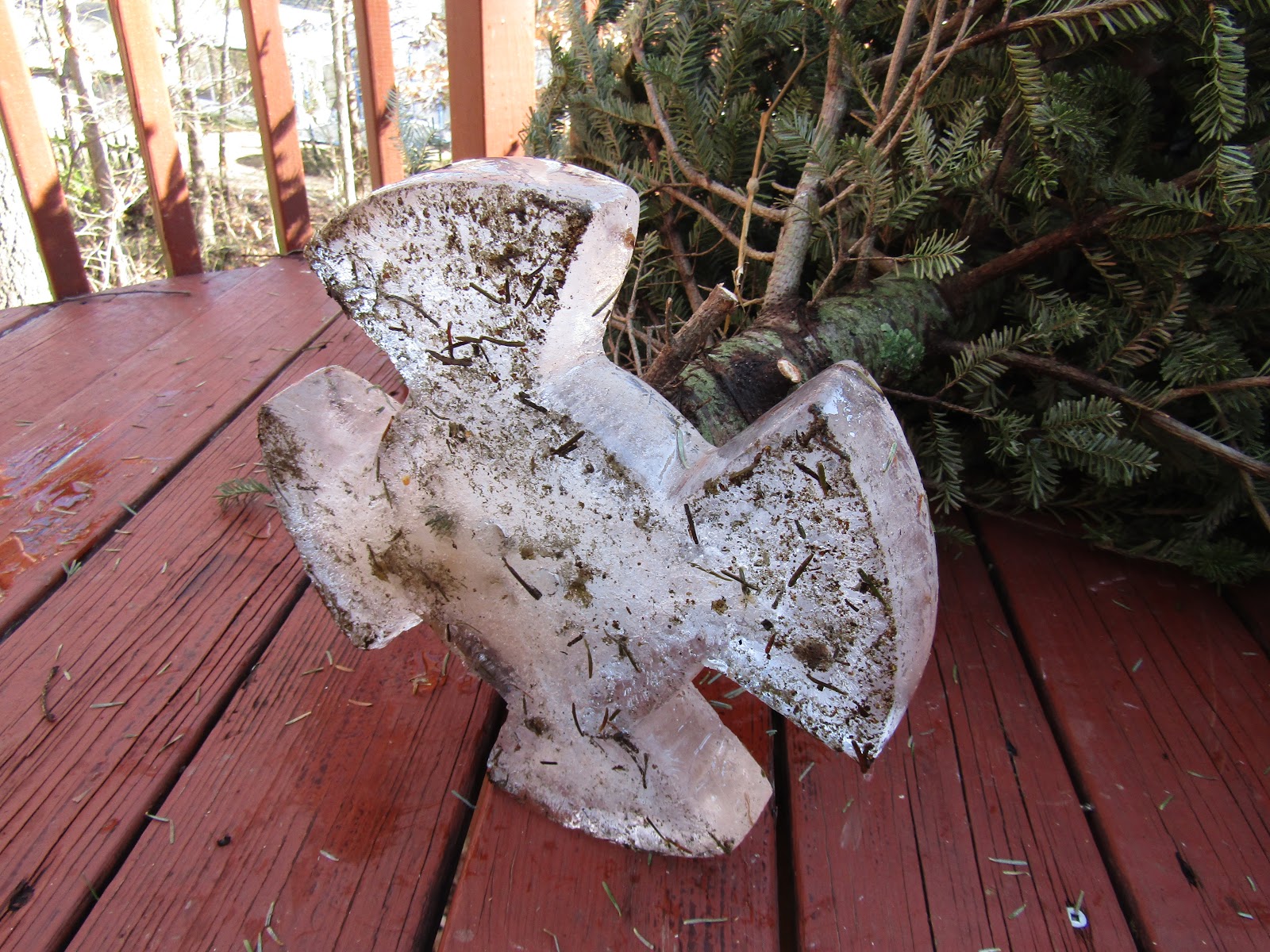
After leaving the Christmas tree (in the stand)
outside on the deck,
it was impossible to remove.
After the sun had been out a while,
I tried again and found this:

 
BRRRRRR!
We took the bitter cold in stride by mostly staying home
and enjoying the cozy fireplace. 

Embracing the season,
we made ice luminaries.


We repurposed two cans of different sizes
and placed the smaller into the larger.
Then we filled the space between them with water. 
You could also add berries, birdseed, or leaves
to the water to make them more decorative.


To keep the inner cans from floating,
we weighed them down with bricks.
These were left on the front porch overnight,
as we knew temperatures were set to fall below 32 degrees.


The next day when we checked on the cans,
sure enough, the water had frozen solid!


To remove the outer can,
we simply ran some water on the outside.
It slipped right out.
To loosen the inner can,
we just added water to the inside of the can.
Because we used a larger can with ribbing,
this transferred onto our luminary.
Voila!


We loved the way they turned out!
Adding a votive or tea light candle made them sparkle.


You could also use the battery-operated tea lights.


Depending on where you live,
you could line your pathways with these sweet things
and savor them all winter.
What a fun science project for kids!
Our cold snap has come and gone,
so ours have long since melted.
But you can be sure if it returns,
we'll be fashioning a few more of these to enjoy!


Tuesday, August 8, 2017

It's a Lego World


For the last few weeks,
a local library has hosted a challenge.
Kids could bring in their favorite Lego build
and have it displayed in the case that greets visitors.
C was up for the challenge,
and in fact, 
contributed several builds.
Those are his Mario and Windows logo creations in the bottom left corner,
as well as the jet on the bottom right.
His are all free builds,
which means that no kit is used in the creating.
He fashions these masterpieces from his own imagination.
He truly amazes me with some of the things he comes up with.


The folks at the library told us that by far,
his Creeper build from the Minecraft game
was the most popular.
The head swivels and the legs move too,
but it seems the kids just enjoy the likeness alone.


We participated in a Lego Robotics class last week.
This workshop was sponsored by the local 4-H club.


The kids (all boys in this class) were given a laptop
and a robot from the EV-3 Lego series.
C has one of these at home, so he was quite familiar with it.
The kids were asked to perform several programming functions
to make their robot do designated tasks.


This robot was able to follow the tape line
using color sensors. 
It detected the difference between the grey carpet and the white tape.


Another task the kids were asked to program their robots to do
was to follow this maze from one end to the other.
It took a bit of tweaking,
but changing the program via the computer
enabled the kids to be successful through trial-and-error. 
A great way to learn so many lessons,
including perseverance.


C was able to rebuild his robot so that it could perform the way he wanted.
He noticed several characteristics on some of the other robots
that he thought would work better,
so he rebuilt his to make it more efficient.

What a great activity for him.
It not only fostered confidence in his skills,
but it gave him the opportunity to interact with other kids
who share a similar interest.
We are grateful for these experiences,
as they allow him to process social skills
in a natural world environment,
something for which we can never get enough practice.

We think it's wonderful that the 4-H program 
is willing to work with kids with disabilities
(not everyone is),
and include them in these valuable experiences.

We're considering starting a Lego Build club
at the library we featured at the head of this post.
Any chance we get to have kids unplugged
and using their imaginations
is something we can get behind.
Build on!


Tuesday, July 25, 2017

Hands On Gardening Workshop


Last week, I participated in a hands-on class,
 sponsored by the NC Cooperative Extension Office 
in nearby Newton, NC.
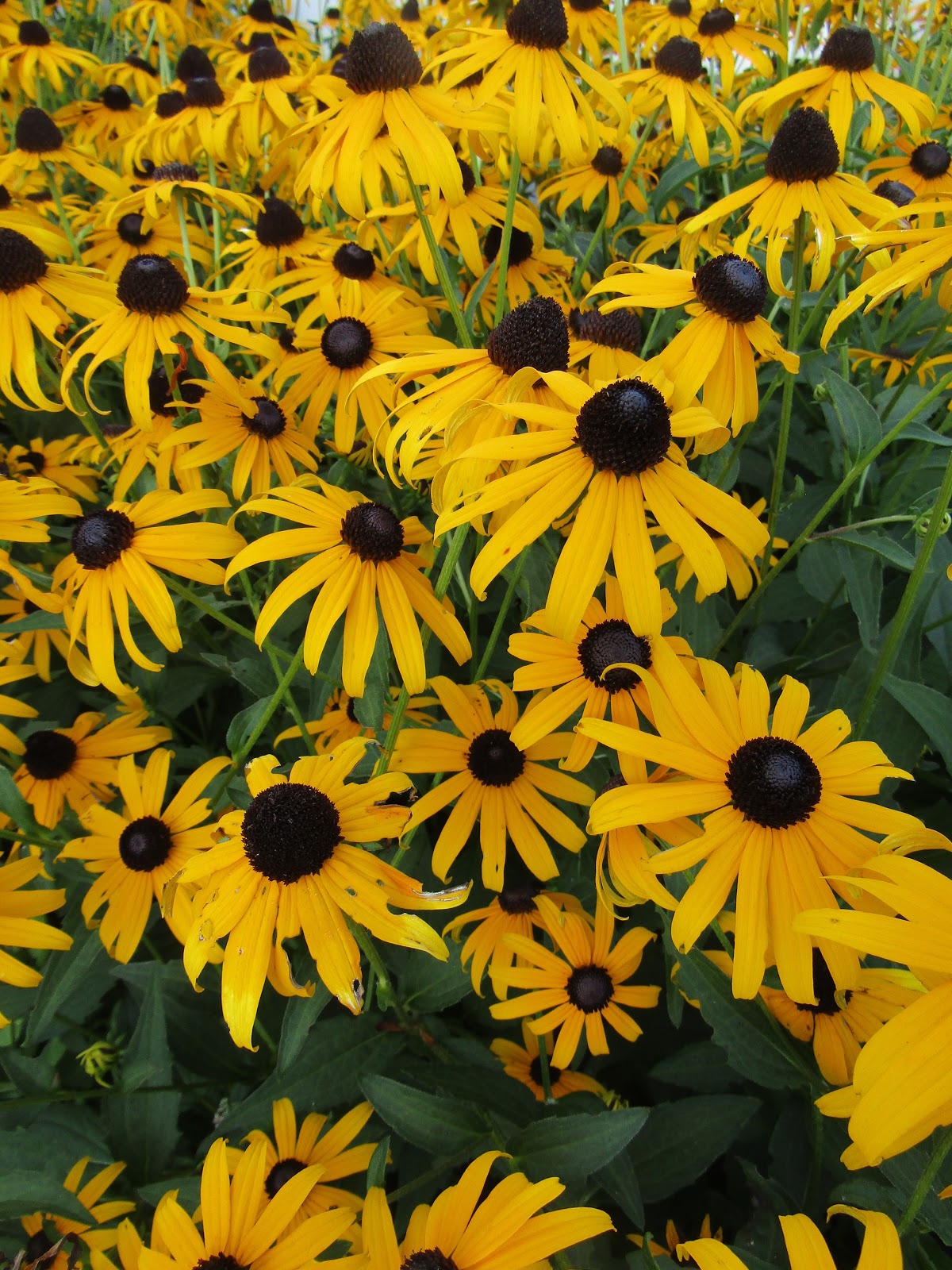
Would you look at this amazing display of black-eyed susan?
Upon first sight, I think my heart actually skipped a beat.


 This class was all about a hands-on experience.
Four various aspects of creating a successful garden were stressed.
After a brief introduction by Anelle Ammons, a graduate student providing the workshop,
students were encouraged to dive in to the different displays.
The first, seen here, was all about vermicomposting.
This is a subject in which I am most interested.
Although we do have a large compost pile started on the property,
I'd like to give this worm composting technique a go.
I'll be sure to keep you posted on my progress.


Another important aspect of gardening that was presented
was soil composition.


Several materials were exhibited including
coir, peat moss, perlite, pine bark, sand and vermiculite.
It was great to be able to compare them side by side
and make note of their different properties.
Although we were encouraged to use whichever media
best suited our needs, Anelle shared that peat moss
is not a sustainable resource.
Thankfully, there are a slew of available options.


The information that probably helped me the most
was the table featuring the drip irrigation system.
This is something that I've considered using,
but somehow it always left me feeling a bit intimidated.
Just being able to play with the components
made it feel a little less daunting.


 Diagrams and the actual tools at the ready
aided in a better understanding of what it takes
to make the system work.
We were encouraged to put together and take apart
a length of hose and its corresponding apparatus.
There's nothing like firsthand experience with equipment
to increase one's comfort level with something new.


 Another aspect of gardening that was exhibited
was a collection of  the best tools for keeping the garden healthy and attractive.
This table showcased a hand saw, loppers, pruners 
and a host of other cutting and sharpening implements.


Tips on correct pruning techniques were displayed
and students were given free rein with the array of tools.


 Who wouldn't want to play work with these shiny new beauties?


The hour passed quickly,
but it was packed with good, solid information
to help us make discriminating decisions 
with regard to our personal style of growing.
I'm hoping to attend more of these hands-on classes.
After all,
the learning is in the doing.


"Success is a journey,
not a destination.
The doing is often more important
than the outcome."
~Arthur Ashe