Showing posts with label onions. Show all posts

Friday, July 31, 2026

Homestead Happenings


Welcome back to Homestead Happenings!
Well, it's been a while.
I was having trouble getting pictures to load up
on my laptop, and I'm not sure how I figured out 
a different way, but we'll see how it goes.
I really am trainable!


This lone sunflower has been a major hub of activity
over the last week or so.
Although many, many sunflower seeds were planted,
for some reason this is the only one that showed up.
It could be the drought that we are still experiencing,
but it's just not been the same summer without them.


The Seminole pumpkins are doing well
and started to climb the arched cattle panel.
So far, we have no flowers, but I continue to hope
that we will be able to enjoy this fall treat.
This particular pumpkin stores very well.
Let me know if you'd like some seeds.


The bed where the onions grew is now seeded with
carrots and a few lettuce varieties.
I've grown carrots before, but had decided
that since organic carrots are so affordable at the store,
it's not really worth it to grow your own.
I changed my mind.
The boards and screen cover you see are 
left in place until the seeds germinate.
I learned that on GrowVeg,
one of my favorite YouTube gardening channels.
The secondary reason for the covers is to keep the chooks
from scratching up the seeds.
Let's see what pops up!


Some of the leeks have been harvested,
and these will be cleaned, chopped and put into
the freezer in glass jars.
They will come in handy during soup making season.
There's nothing better than homemade leek soup
on a cold wintry evening.
Having this wire rack out on the front porch worked out well.
Garlic, onions, and now the leeks can dry there
before being put into long term storage.
This corner of the porch stays dry and shaded,
so we'll use this method from now on.


I've been thinking of giving up on growing onions,
because the harvest seems so small and the fruit
does not seem to bulb up as expected.
This is our harvest this year (apart from some
which has been given away), which added up to
seven pounds.
They are fine looking bulbs, and I'm sure they will
taste great, but I'm not sure it's worth the extra bed space.
Leeks have always done better in my garden,
so time will tell if this veg makes it into next year's list.


This is my first ever homemade
elderberry syrup made from the land!
The honey is local (3 doors down),
and the recipe was SO simple!
The best tip was to pick the berries
when they are super dark,
place them in a container and freeze them
until you have enough to make a batch.
Once they are frozen, they are much easier to destem,
and fingers stay clean and dry.
This will be a yearly ritual now,
and there are still berries left on the bushes
for the chooks and the birds.
(I'm secretly thinking I need to make more room for elderberries.)


Another new venture in the kitchen
is this non-dairy ice cream recipe.
It uses water, almond butter, vanilla and maple syrup.
It is incredibly creamy tasting and because it
is so clean, it can be enjoyed anytime,
not just for a special occasion.
I can't wait to try new combinations!


The bread baking continues with my new obsession
of everything fresh-milled flour.
The flavor is amazing and knowing that this bread
is actually nourishing my body motivates me to explore
new recipes regularly.
The book below is one of my go-to sources
for easy to follow, simple recipes.


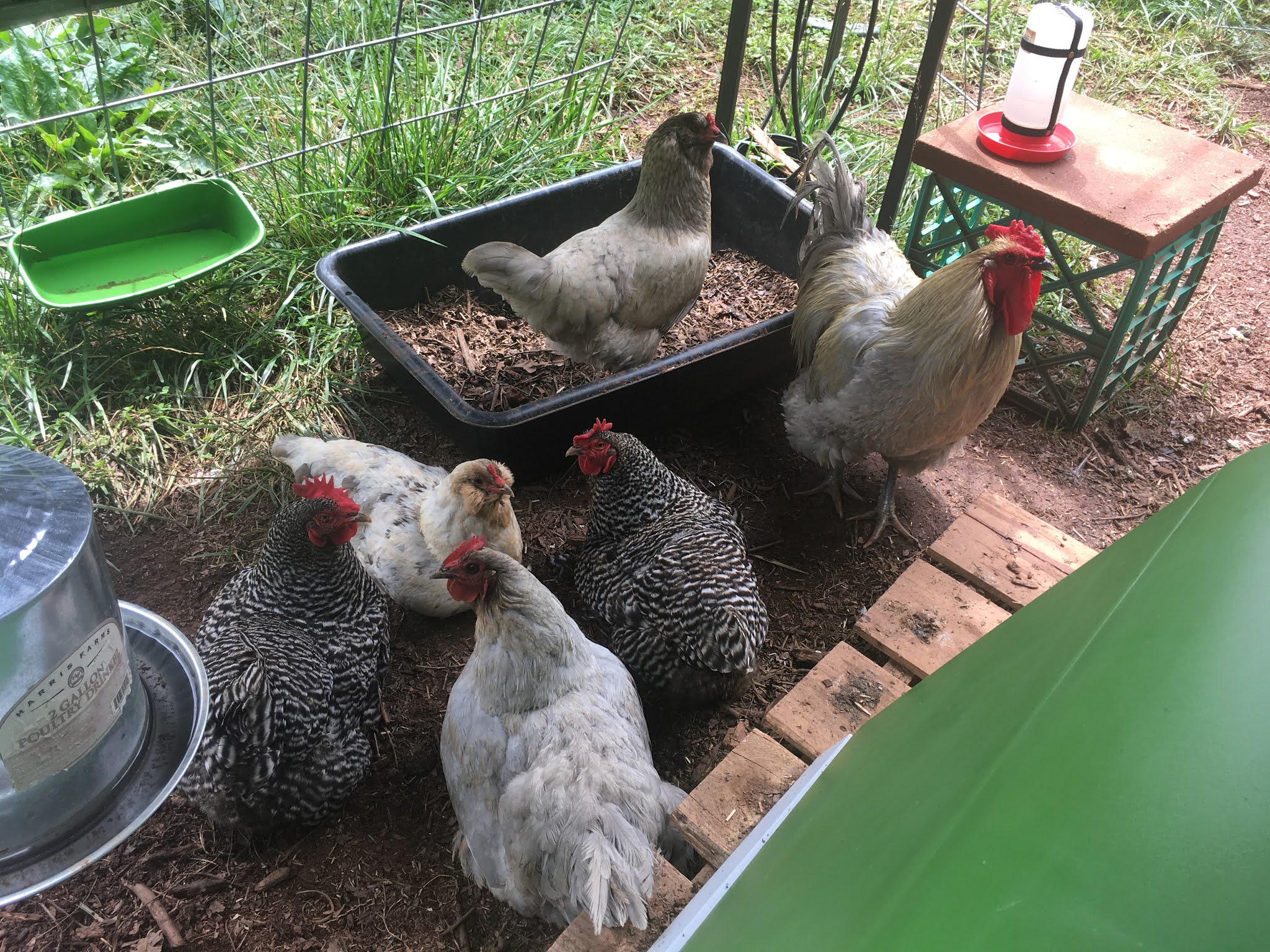
Our baby chooks are all grown up!
They are free ranging with the rest of the flock,
and will soon graduate into the big run
with the rest of the girls,
although they will continue to stay in their own coop.
In just a few weeks, they should be laying and
allowing us to share eggs with our neighbors and friends.

What a blessing these girls have been.
They actually seem to enjoy being together, share food without fighting,
and move as one unit when they are out foraging.
They could teach our older girls a thing or two 
about getting along.
So grateful to have been able to grow our flock
and that everyone is healthy and active.

It feels good to share on the blog again,
and I'm glad that at least for now,
things are working okay.
I missed writing, and it's important to me
to record my day-to-day garden adventures here.
It's the simple things in life that matter.
~daisy


Friday, November 1, 2024

Homestead Happenings


Welcome to Homestead Happenings,
where we share what's happening on our
Piedmont NC homestead.
The garden is humming along, with all beds planted.
Broccoli, cabbage, kale, lettuce,
and a ton of garlic are going to spend some time with us this fall and winter.


The Red Russian kale has been impressive,
with the leaves raising up the row cover.
The bonus is that because of cooler temperatures,
the trouble of bug damage has been zero.
I love the fall garden!


The garlic planting took two days.
Having ordered a pound and a half of soft neck,
the end result was over 150 cloves planted.
No worries about vampires here!
This was the first time I used a new technique
to soak and then plant the cloves.
Here's a great video about the method.


Garlic in several beds (and some assorted places),
was planted 2 inches deep and four inches apart.
About 20 cloves of the hard neck variety 
were also planted, as I've never grown it before.
If successful, this should be plenty of garlic
to get both sister and I through the year.
We may even have some to donate.


A few red onions were planted in a nearby bed,
and we'll see how they do over winter.
They sure look like they were dying to get into the ground!


The second set of Seminole pumpkins were harvested,
which ended up giving us another 14.25 pounds of food.
I've used it for soup and muffins,
and am quite pleased with the results.
It keeps well in a dark place,
but can also be cut up and frozen until it is used.


The Red Ripper beans are continuing to bear,
although are taking longer to dry on the vine,
most likely due to the cooler weather.


We're still being blessed with summer flowers,
including Tithonia, zinnias,


and celosia.
I'll be on the lookout for dried branches
and evergreens to bring inside,
now that consistent fall temperatures are here.

sweet sleeping bee


The big soil bags acquired from a friend
have been emptied and are ready for a fresh
serving of shredded leaves.
The leaves are collected with a mower
and are placed into these bags to spend time
composting until springtime.
We also have a large leaf pile for the overflow.
Leaves are used as mulch and as a soil amendment
all through the year.
Mother Nature always provides,
if we just pay attention.


Seeds continue to be harvested,
including these nasturtiums.
This little seed provides a powerhouse
of color and texture in the garden.
We've had the most glorious nasturtiums this season.

the bullies

All of the girls are doing well,
and are giving us at least a dozen eggs a week.
(Although the three seen here no longer lay.)
They relish their time free ranging,
scratching and foraging,
and the dark orange yolks in the eggs are the result.
What a blessing the chooks are for so many reasons.


This is sweet Matilda,
"She who will not be contained".
At every opportunity,
she scales the fencing and strolls the property.
She is a free spirit and quick as a wink.


This week I enjoyed some homemade
carrot-ginger soup with this
polenta based cornbread.
There was no cornmeal to be found in the kitchen,
so I subbed with what I had
and it turned out better than expected.
Isn't that always a welcome surprise!


Here's hoping you have some wonderful surprises 
awaiting you this weekend.

Friday, July 2, 2021

Garden Friday


Welcome back to Garden Friday,
where we share what's growing in our Piedmont garden.
The chooks are trying to keep cool this summer
by staying in the shade of the cattle panel cover.
They are also getting daily treats of ice cubes in their water
as well as frozen veggies.

 
The garlic, which had been harvested a few weeks ago
and left to cure in the garage for two weeks,
is now ready to use.
A good measure was given to sister,
who uses it religiously.
No fear of vampires in her house!

 
The onions are now taking up residence in our "spa" room.
They are resting on a pallet to cure for two weeks,
and then will be ready to use in all kinds of dishes.
Some may be chopped and frozen for future use.


One of the projects I've slowly been working on
is clearing out part of our "Kelsey's Woods",
(Any Andy Griffith fans out there?),
to make room for future woodland plants.
I'd love to fill up this space with hydrangea, hosta and other shade lovers.
 The framed section you see in the middle of the photo
is our blueberry patch, complete with drip irrigation.
It's been so nice to happen upon a few ripe berries to munch on while I'm out there.

 
I'm having a hard time locating any more of these twisted wire stakes.
I have no idea where I first got them,
but they work wonderfully for climbing beans.
The search goes on...

 
The beans are slowly showing up on the vines,
and it's so exciting to see them all form in their own way.
I'm not sure what type of bean this is,
but I would guess it's some sort of drying bean,
from the shape of the pod.

 
This is definitely a green bean, or string bean,
and most likely the "slenderette" variety,
the tastiest green bean I've ever grown.

 
And lastly, in this bed, the rattlesnake bean,
which is a great drying bean.
The variegated pods are so colorful!
This is the first time we've grown these,
so I look forward to sharing my experience with them.
Having dried beans in the pantry is vital for me,
as I eat no animal protein and enjoy soups, stews and burgers
made with these flavorful nuggets.


With more summer-like temperatures this past week,
the loofah is finally taking off.
It will cover the gazebo frame in the chicken run,
and give the chooks more shade to enjoy through the heat and humidity.
 I may even give them some of the fruit to see if they like it.
It can be eaten when it is smaller, around 4-6 inches,
just as you would zucchini.
We do plan to leave some on the vine to harvest for using as sponges.

 
Another cattle panel arch was added between two of the 4 X 4 beds
to accommodate our growing squash vine.
Adding vertical growing space not only saves room in the beds and surrounding walkways,
but it keeps the foliage off of the ground,
which can lead to fungal and pest pressure.


There are at least two different varieties of squash growing in this bed,
and so far, (knock wood), I haven't found any squash bugs or eggs on the leaves.
I make it a point to do a nightly check on the foliage,
to try to stay on top of it.
The garden is in a new location this year,
so maybe that is helping with pest control.
 
 
I see squash soup in my future!


One of the partial cattle panel frames that was being used over the winter
with row covers,
is being repurposed to help support our sweet potato vines.
They are just getting started,
but with the onset of more heat, they no doubt will be hard to stop.

 
The final crop was sown this week.
Two types of pumpkin seeds were planted 
in the bed where we harvested our onions.
I have thus far not had much luck in growing pumpkins,
but that doesn't mean I've given up trying!
Most likely, I will add a cattle panel trellis to the bed,
so that the plants can grow vertically and stay off the ground.


It would be great to be able to harvest the seeds
after using the pumpkins to make all sorts of goodies.
They can be eaten after roasting in the oven,
or saved to replant next year.

 
This little fuzzy fellow stays hunkered down next to our air conditioner.
Whenever I'm out there, I see him scurrying around.
I'm not sure if it's a wooly bear caterpillar,
but I read about this critter's legend:

"According to folklore, the amount of black on the woolly bear in autumn varies proportionately with the severity of the coming winter. The longer the woolly bear's black bands, the longer, colder, snowier, and more severe the winter will be. While the wider the middle brown band is, means it will be a milder upcoming winter."
Find out more about this here

What do you think?
Do you know anything about this fuzzy wuzzy?
Do tell!

Tuesday, June 8, 2021

"Spooning" Onions

 
newly planted onions


This was the first year that I grew onions in earnest.
There's always a learning curve when trying new ventures,
and I'm just beginning to find out what's entailed with growing this crop.
It doesn't require much, but it's satisfying knowing that should I master this crop,
I'll never need to buy onions again.

 
These are the Walla-Walla variety,
which were acquired from Sow True seeds. 
They are a sweet Spanish variety that can be planted
either in the late summer for a June harvest,
or in the early spring for a late summer harvest.
I enjoy growing year-round, so this variety fit right in
with my plans to overwinter a few crops like garlic and leek. 
These seeds were planted in early fall and pretty much
left to their own devices.
I mulched over them with our own leaf mulch
and just checked on them once in a while to see how they were doing.
I didn't know about spooning
which helps the onions grow better.

 
 I've been watching a vlog called,
That 1870's Homestead,
where Rachel talked about
(Click on the link above to watch her video).
It's a new concept to me, but she swears by it.
Instead of allowing the mulch and soil to envelope the bulb,
the soil around the base of the bulb is moved aside,
so that only the roots are buried.
(It has been said that a spoon was used to do this.)
This is supposed to promote a larger bulb.


Although I'm a little late to the party this year,
(what else is new?),
I went ahead and spooned the onions ,
and will keep this in mind for next season when I start anew.
It will be interesting to see if it makes a difference
compared to this year.
 
 
Many of the onions look just fine already,
and I'll harvest the larger ones for processing,
but it will be fun to see if the spooning
will make any difference by the end of the month,
when I will need to harvest them all.
This onion is supposed to be good for storing
for just a few months,
so I may need to research another variety that can be stored long term.

Do you have any experience with onions for long term storage?
Have you heard of spooning?