Showing posts with label straw bale garden. Show all posts

Friday, September 27, 2019

Garden Friday


Welcome to Garden Friday!
It may be officially autumn, but it still feels like summer.
Fall planting has not begun,
as we await cooler temperatures to get things started.


 It hasn't rained in over a month,
but the twice a week watering seems to be enough
for the sweet potatoes and a few other crops.


 The pollinators are getting what they need.

sweet potato box


With the melons ripped out,
the arches will soon have room for the snap peas to climb.


 The Red Ripper beans are starting to slow down,
with leaves turning brown and less blooms showing up.


Even the strawberries are faring well,
considering the lack of rainfall.
The straw bales really hold in the moisture.

black-eyed Susan vine in straw bales


 The basil was a late comer to the garden,
but is still doing well, even with 90 degree days.
We have had temperatures at or above ninety for 80 days straight.


 I started tearing out the okra,
which was easier than I thought,
but I'll leave the rest of the task for the weekend.
The plan is to pick up the materials needed for the new raised beds
next week so that fall planting can begin.


The loofah thrives on drought.
The flowers just keep on coming
and we're amazed to see the size of the gourds.


This is about the stage that they are being harvested.
The copper-colored, brittle skin is easily removed
to discover the scrubber underneath.
We've started shaking the peeled gourd to remove the seeds.


When tearing out the cucumbers,
this big guy was unearthed.
It's since been made into cuke salad.


Last weekend, we were finally able to empty the trailer
of the free mulch we got from the landfill.
Our county provides it to residents
and we have been blessed with many a load.


The pile of cardboard and newspapers was bothering me on the front porch,
but it needed to stay dry until we could get the mulch.
So glad we got this project done, so we could tidy this up.


Newspapers are used as a weed block
anywhere that might be planted,
like under this tree.
It would be nice to add some shade lovers underneath,
and the newspaper makes it easier to add plants later on.
Cardboard is better used for walkways,
where no planting will take place.


I like the way the mulch helps to dress things up.
We recently learned about a nearby tree trimming company
that is located near our neighborhood.
We are supposed to be on their list for free wood chips.


If we get a delivery soon,
the wood chips will be added to the front facade
over the mulch.


I'm hoping to get some bulbs planted this fall
to add a bit of color to the front of the house.
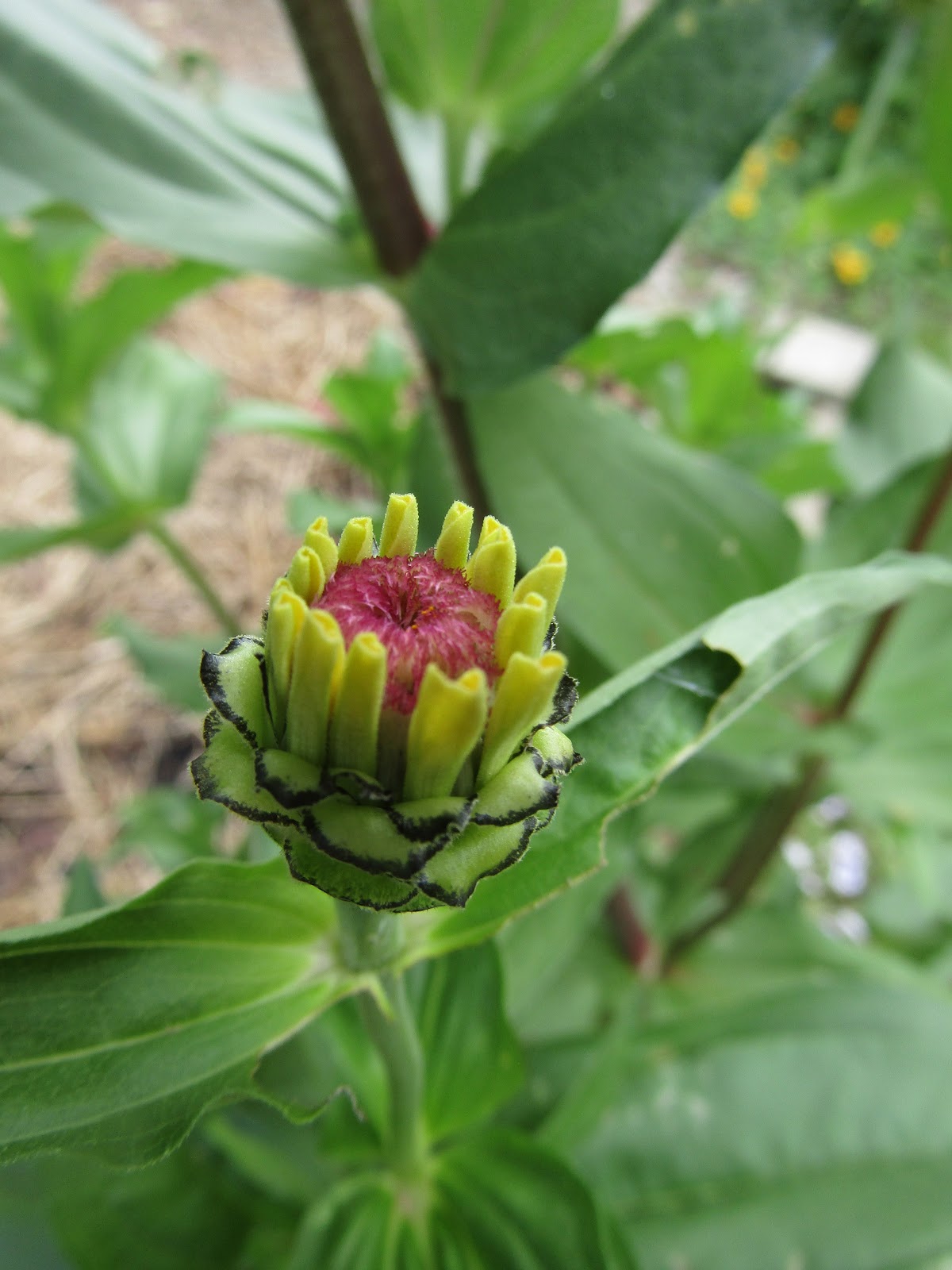

 Elsewhere, the blooms haven't stopped all season.
The butterflies have been all over the zinnias,


 and we are happy to oblige them what they need.
They get nectar, we get blooms,
everybody wins!

black-eyed Susan vine


 We've been doing our best to keep the bird baths
clean and full, using water from our rain barrels.
It's been so dry, that the birds, bees, and squirrels have been frequent visitors.
We keep stones in the bird baths (usually lids from pots)
so that the butterflies can make use of them to soak up moisture.


It's been a long, hot and dry summer.
With no rain in the forecast for the next week to 10 days,
it might be time to start a rain dancing ritual.
 I'm up for it!

Friday, September 20, 2019

Garden Friday


Welcome back to Garden Friday!


When the gardener's away,
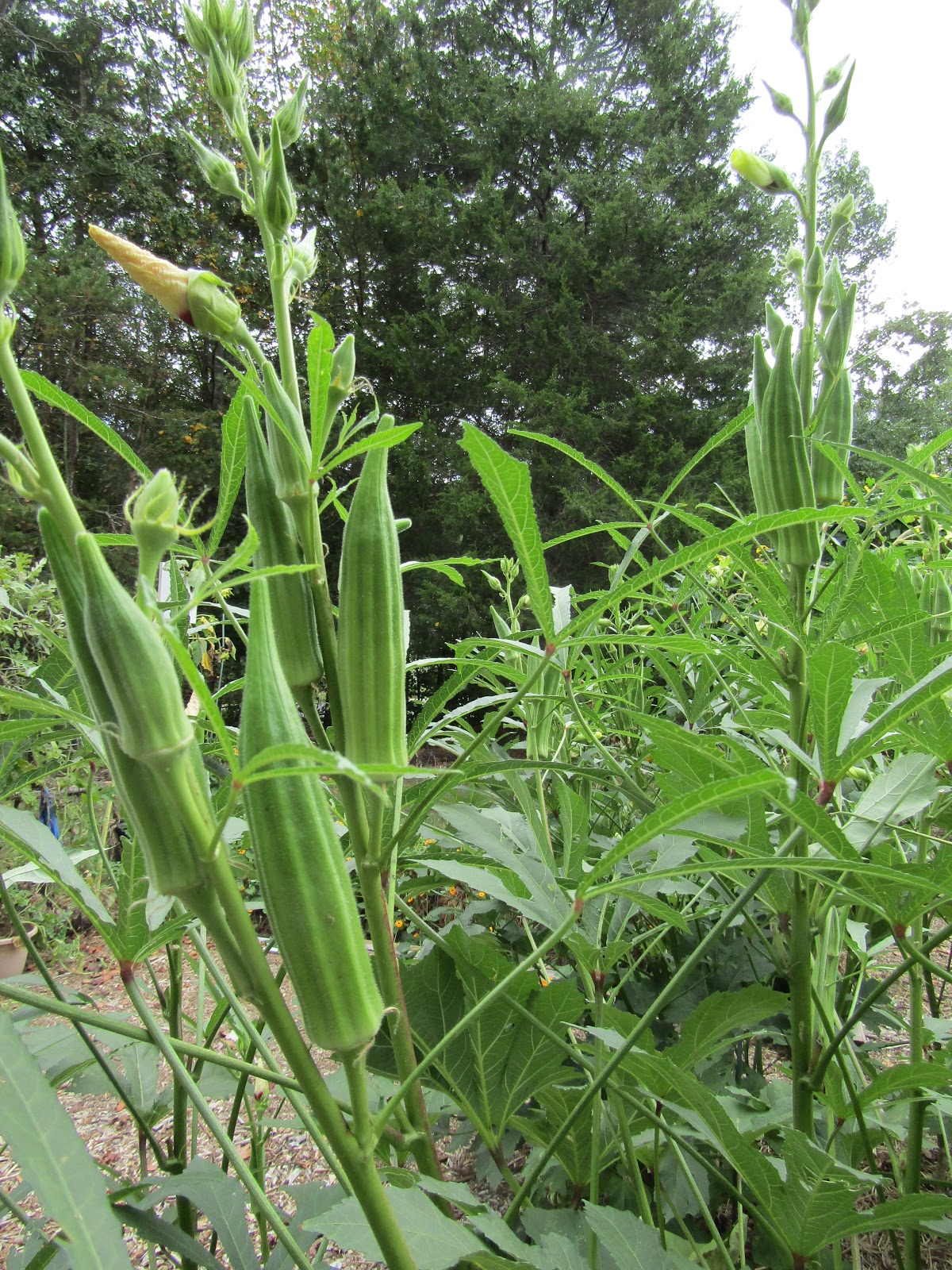
the okra will grow.
         And grow.
                           And grow!


 I was dogsitting for friends and away from home for a few days.
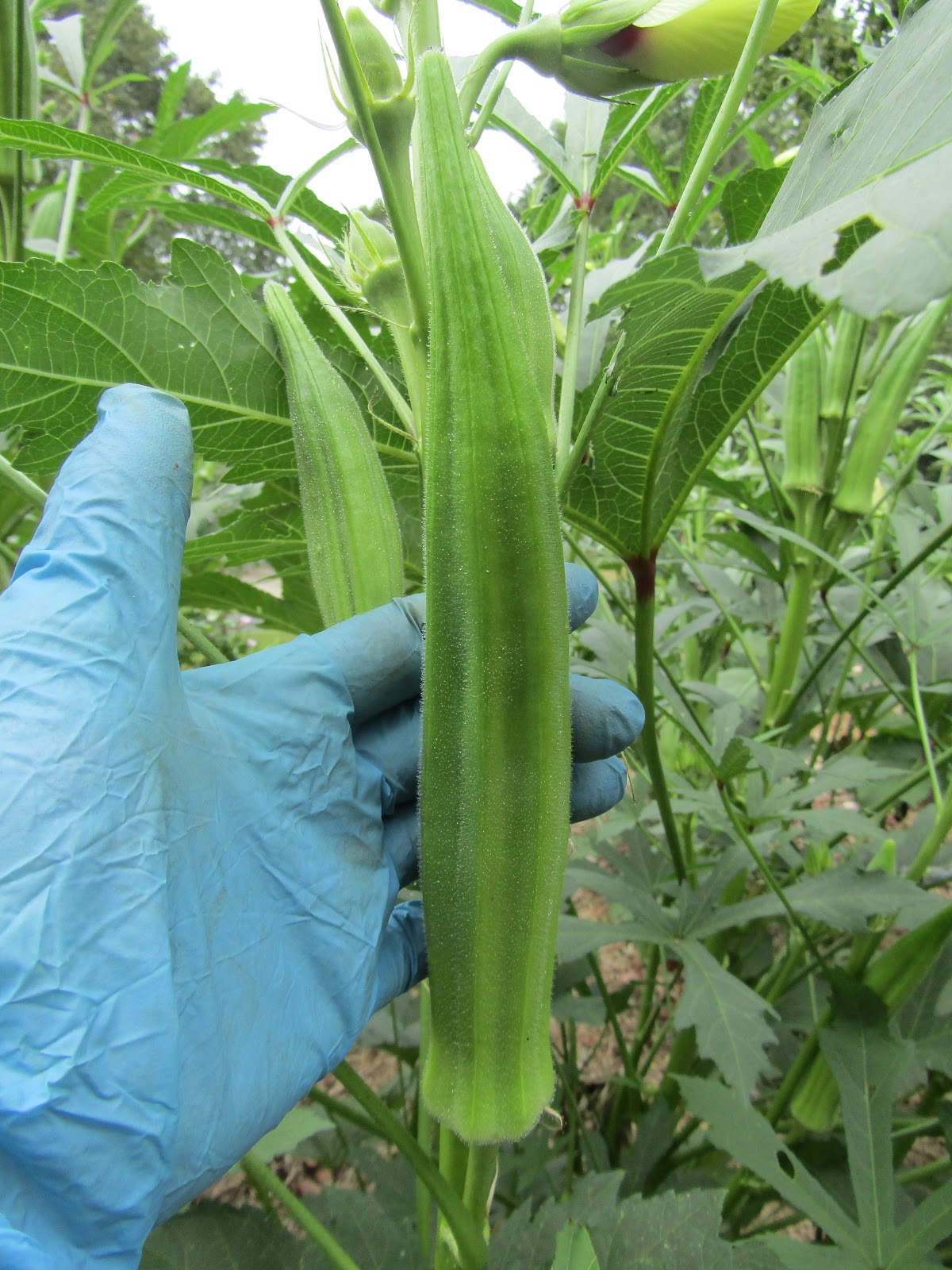
This is what I came back to.
If okra isn't picked twice a day,
it can grow out of control.
This Bradford Family variety can still be enjoyed if it gets away from  you,
but this is a bit beyond what would probably taste good.
Thankfully, nothing goes to waste,
we have several compost piles for just this purpose.


Since we are getting ready to add a couple of new beds to the garden,
the okra had to be pulled out to make room.
These stalks will be added to our open-air pile.


 The okra stems were left in place,
so that I'll have a "handle" with which to pull them up.
Removing the stems after they've had a while to dry up
is much easier than trying to yank them out while they're still green.
(Ask me how I know.)
Two okra plants remain in straw bales until it gets cooler and they're done.


A wonderful vision as I visited the garden for the first time in days
was the riot of Red Ripper beans, drying on the vines.
This new-to-me crop has been very satisfying to grow.


 It's one of my favorite things to sprout in the kitchen
to use on salads or sandwiches.
Once the pods turn brown, they can be plucked off of the vines.


I'll have my work cut out for me this weekend,
shelling this pile of beans,
but it's a labor of love.


 These beautiful beans will be a great addition 
to any soups or stews I'll be creating this fall and winter.
And, of course, sprouting can happen year-round.


The Diamond eggplant variety is just now getting close to harvest.
With a recent cooling off, I'm not sure if they will continue to grow.


 For some reason, the strawberries are lookin' mighty fine!
It hasn't rained in weeks, but you wouldn't know it to see these.


 Isn't this loofah a beautiful shade of copper?
I decided to try to harvest one,
just to see how difficult it would be to peel.
I cut this one down from the vine
and made slices in the skin vertically.
The husk came off so easily!


It is so exciting to grow something new!
The seeds are inside the loofah,
and removed by shaking or using a long, narrow instrument to coax them out.
Loofah is one of the best exfoliators to be found,
and rejuvenates the skin.


 We're still waiting to harvest even one of our watermelons,
and with temperatures fluctuating,
I hope we still get the chance.


The bush beans transplanted a few weeks ago
have almost all been eaten up by something.
It's the same problem I had earlier in the spring.
I will just direct seed in another week or two,
once cooler temperatures are more consistent.


With no rain in the forecast,
hand watering is still the best way to keep the garden going.
I'm hoping to purchase the materials necessary
so that I can work on my drip irrigation system.
By spring planting, I would like the new beds in place,
and the drip working to irrigate all the beds.
I can't imagine how much time that will save me.


Autumn is (literally) right around the corner!
What have you got planned for your fall garden?

Tuesday, August 27, 2019

Planting Straw Bales


A couple of years ago,
I discovered straw bale gardening.
Intrigued, I checked this book out of the library
to find out more.
Being the experimental gardener that I am,
I decided to give it a go.


There are several reasons why folks might utilize straw bales to grow:
1.  Not enough space in which to grow
2.  Poor or lack of soil in their location
3.  Mobility issues with bending down
4.  Living in a rental or temporary place

Although we do have poor clay soil on our homestead,
the other issues don't really apply to our situation.
I just thought it sounded like something neat to try.
I enjoy challenging myself to pursue new things.


Last year we had some success.
We grew mostly kale and lettuces in them.
In fact, anything other than root crops do fairly well.
The bales are saturated with water
(you can add fertilizer sporadically as well)
for 10-14 days,
and then they are ready to go.
A good, loose potting mix can be added to the top of the bales,
and seeds added according to their proper depth requirements.


The other option is to use transplants that you've grown or bought.
Creating a planting hole in the bale, 
the transplant is simply placed in the hole
with compost or potting mix.
That's it!
I've found that the bales actually retain moisture quite well,
so watering is not needed as often as say, containers.
Of course, anytime you plant seeds they must be kept moist until germination,
and seedlings need to be watched early on to coddle them a bit.
Soaker hoses are a good option for those who have a nearby spigot.
Drip irrigation would be even easier, if it's available.
I ended up watering by hand with very little trouble.


This year I cheated a bit on the "conditioning" aspect.
I didn't fertilize the bales at all before planting,
just went ahead and added my transplants
after watering them for a week or so.
They've done fine.
The first fertilizing is done when the crops develop flowers,
and then every month or so.
I can't even say I'm that diligent about fertilizing,
but my plants seem very forgiving.


okra

This season, we've grown cucumbers, eggplant, okra and strawberries in the bales.
With a few open spots for fall planting,
I'll be adding broccoli, kale and Brussels sprouts to the mix.


Even flowers do well in the bales.
Look at how happy this Black-eyed Susan vine is to envelope them.

We've secured a dozen or so bales for the spring
from a fella who lives less than 5 miles away.
He charges only $3 a bale for organic straw
because it's what he has left over 
and he needs the space for other things.
The bonus is that the bales that break down this fall and winter
will become mulch for beds in the spring.
They are also a great addition to the compost pile.
Then we'll start again with fresh bales for our springtime garden.
We love to recycle any way we can.


I hope you'll consider straw bale gardening.
It's a lot of fun and can enrich your gardening experience.
Get your bale on!

Friday, August 23, 2019

Garden Friday


 It's Garden Friday here in the Piedmont!
Here's what we have growing.


The orange sweet potatoes are starting to climb the arches.
With today's expected rain,
they may be able to get some size to 'em. 


The white sweet potatoes are outgrowing their raised bed
and are loaded with blooms.
I still haven't figured out why these are doing so much better
than their cousins.


 The arches are starting to fill in
with melons and beans.
I love the shade it creates and the dramatic effect
serves as a great focal point.


We have a few melons getting bigger every day.
I found one that had fallen off the wire trellis,
so I'll have to fashion some slings so that we don't lose any more.


No support needed for the loofahs.
They gladly dangle from the vines,
even though they are gigantic.


 This one turned out to be an unusual shape,
 I think it got tangled up in some of the vines.


 The first loofah we discovered on the trellis was picked
when it began turning yellow.
We're gonna let it dry out
and then peel the skin off.
This crop has been a blast to grow.


We're getting a steady stream of okra now,
with some planted in our raised rows
and a couple nesting in the straw bales.
This year I've been roasting it along with my other veg,
but I'm going to try to save some for pickling
so that I can enjoy it the rest of the year.

okra blossom


The first butternut squash was picked
and it is curing for a week or so.
I found out that one of the ways to determine if they are ready to harvest
is that the stem begins to turn brown.
Most of these are ripening at the same time,
so they will have to be harvested and stored
or given away to friends and neighbors.


 The first eggplant of the season was picked yesterday...


 and I can't wait to roast it along with some other goodies.


I'm not too sure about growing pumpkin.
It's not apparent what it needs,
but I suspect it's not getting enough water.
I'll keep at it, and hope for the best.


 I must be more diligent about getting rid of these eggs,
which make themselves at home on the squash leaves.
They are definitely not helping my production.


C found this curious critter on the front window yesterday
and it stayed there almost all day long.
Looks like a leaf, doesn't it?
Mother Nature has some fabulous disguises!


We're hoping we get a deluge today,
so that hand watering will not be necessary.
It's a small price to pay though,
for the bounty the garden gifts us with.

What are you harvesting this summer?